ARTICLES

What to consider when deciding where to start with end-of-line automation, from case forming and case packing to palletizing.
End-of-line automation covers several very different processes, from case forming and case packing to palletizing. One company may be looking at the repetitive handling involved in palletizing finished cases, while another is trying to automate how products are packed into those cases in the first place. Case forming, case packing and palletizing may all be part of the same flow, or only one of those processes may be relevant.
That is why there is no universal place to start. The easiest process to automate is not always the one that will create the most value. The better starting point is the process where automation can solve a meaningful operational problem and where the application can be clearly defined.
Before looking at robots, grippers or complete systems, it is worth understanding both the problem you want to solve and what the application would require in practice.
What makes an end-of-line process a good candidate for automation?
End-of-line automation does not have to mean automating everything between the product and the finished pallet. An existing packing process may work well while palletizing remains manual. In another operation, the opportunity may sit earlier, where case forming or case packing is still done manually.
A useful place to begin is with the reason automation is being considered. Repetitive physical work, staffing challenges, throughput limitations, inconsistent processes or frequent operator intervention can all create a strong reason to investigate automation. But the size of the problem is only one part of the decision.
The task itself also needs to be understood. How repeatable is the process? How consistently do products or packaging arrive? What changes between production runs? What needs to enter the application, and what needs to leave it?
A repetitive task with predictable inputs and limited variation presents a different engineering challenge from one where products, formats or requirements change regularly. Once that is understood, requirements such as payload, reach, throughput, available space and changeover can be defined against the real application rather than becoming the starting point.
The same questions apply across end-of-line automation, but each process creates different requirements.
Case forming: what determines the right automation approach?
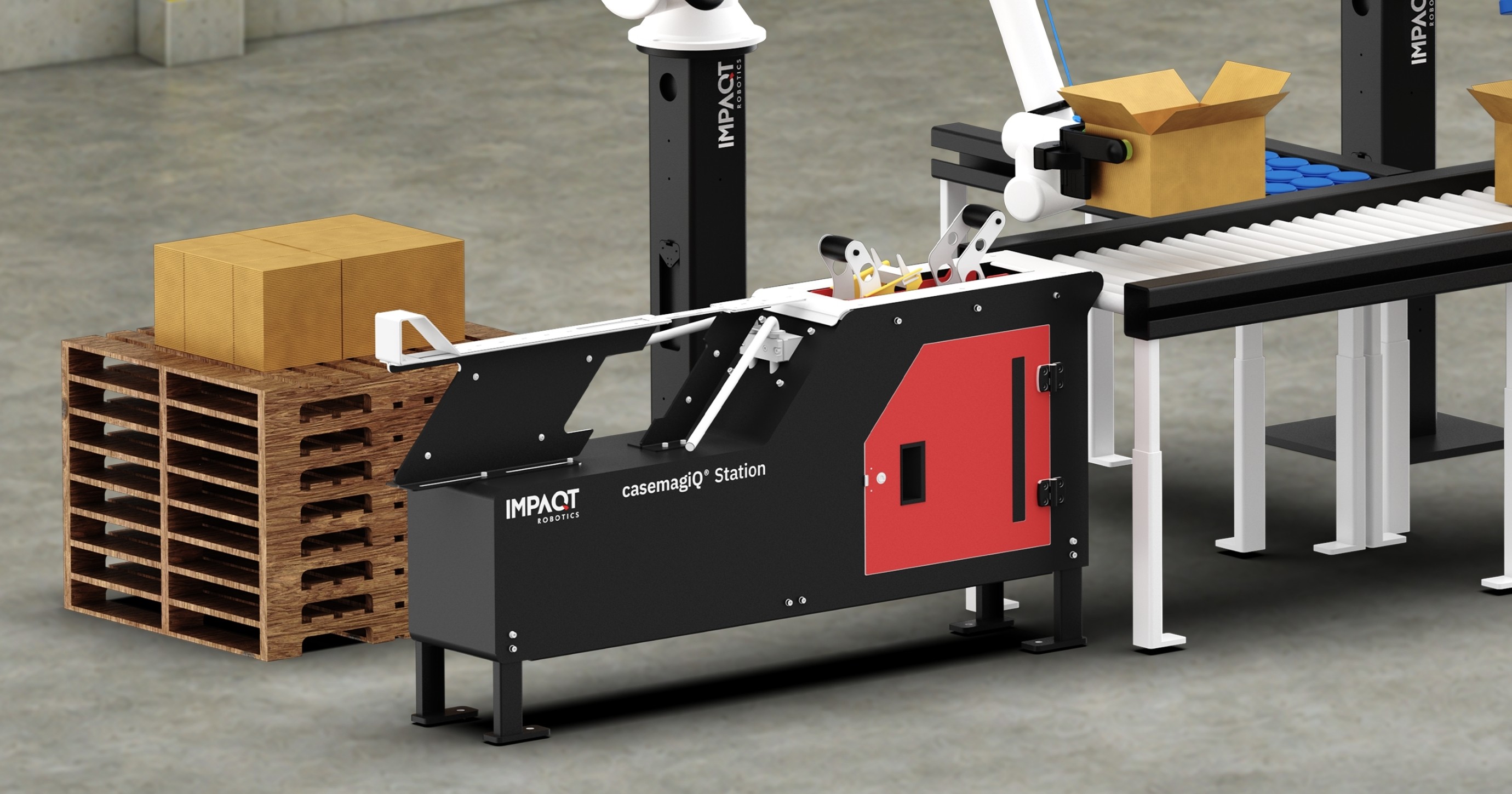
In case forming, the basic task is repeatable: take a flat corrugated case, open it and prepare it for packing. The complexity comes from the range of cases that need to be handled and what needs to happen once each case has been formed.
An operation running a small number of consistent case formats has different requirements from one that regularly changes carton dimensions. Throughput matters, but so do changeovers and the way the formed case needs to be presented to the next process.
For example, the case may need to remain in position for robotic packing, move onto a conveyor or be transferred in a specific orientation. Opening the carton is therefore only one part of the robotic task.
These requirements can also influence the type of automation that makes sense. Dedicated case-forming machinery and robotic case forming approach the task differently. The balance between throughput, case variation and the wider production flow can help determine which approach fits. We explored these differences in more detail in our comparison of robotic and machine-based case forming.
Case packing: product and case variation both matter
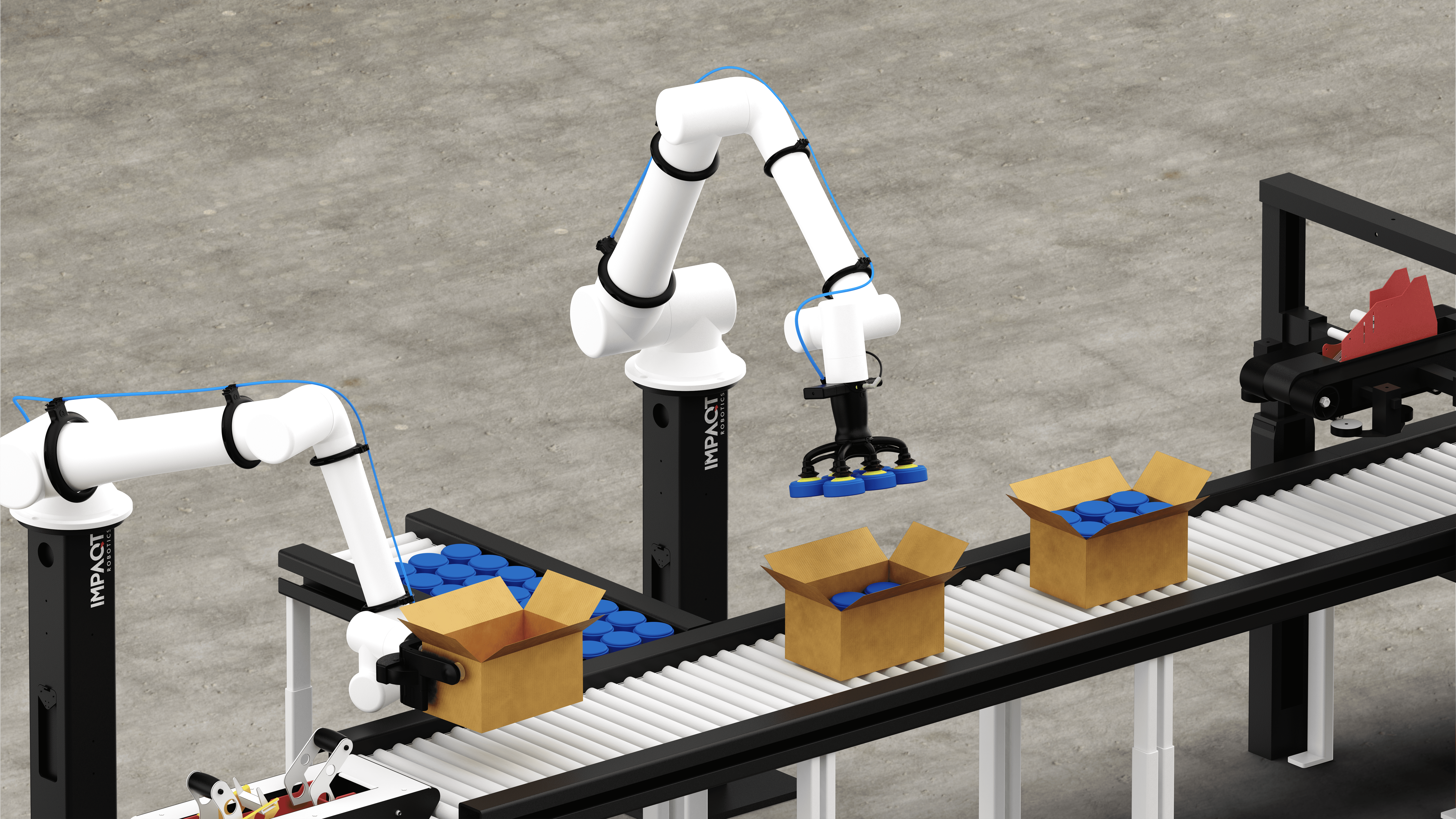
Case packing introduces a different challenge because the automation has to deal with both the product and the case. Product dimensions, weight, shape, surface, and orientation can affect how an item is picked. The case adds another set of physical constraints, while the required packing arrangement determines where the product needs to be placed and how much room the robot and gripper have to work.
This is why simply counting SKUs does not tell you much about the complexity of a case-packing application. Ten products may be relatively straightforward if they share similar handling characteristics, packaging, and packing patterns. A smaller number may be more demanding if each requires a different gripping approach, case format or arrangement.
These constraints extend directly to the end-of-arm tooling. A gripper may need to accommodate different products while also fitting inside the available case opening and reaching the required placement positions.
This is one reason case-packing grippers often become custom engineering projects. The question is not only whether the robot can pick and place the product, but what the tooling and surrounding application need to do for that movement to work reliably.
Palletizing: what defines the application?

Palletizing is repetitive by nature, which makes it an obvious process to investigate when manual handling, staffing or production requirements become a challenge. But product weight and dimensions are only part of what defines the application.
Pallet size, pallet pattern, required stack height, throughput, and available floor space all influence the setup. If several SKUs are involved, the application may also need to accommodate different products, patterns or changeovers. Two operations palletizing exactly the same case can therefore still be very different automation projects.
The engineering also extends beyond the robot and gripper. Controls, pallet positions, software, safety requirements, and supporting hardware all form part of the application.
When these elements are engineered from scratch for every project, much of the same work repeats from one palletizing application to the next. That repeated engineering is one reason a platform approach to palletizing can make sense.
The practical choices around the application can also become palletizing pitfalls that affect performance and ROI.
What changes across end-of-line applications?
Looking across case forming, case packing and palletizing, two factors repeatedly shape the automation challenge: variation and the interfaces around the application.
Variation matters more than SKU count
Describing an operation as high-mix does not tell you what the automation actually needs to accommodate. A new product may have no effect on case forming if the same carton is used. It could require a different gripping configuration during case packing, while palletizing remains unchanged because the finished case and pallet pattern stay the same. In another operation, one product change could affect all three processes.
That distinction matters because flexibility comes with engineering requirements of its own. Designing around variation that rarely or never occurs can add unnecessary complexity. Overlooking variation that happens every day creates the opposite problem.
The more useful questions are: What changes? How often does it change? Which parts of the automation need to respond when it does?
Where does the application begin and end?
Even when only one end-of-line process is being automated, it still needs to interact with what happens around it. A case former needs flat cases to be available and has to deliver the formed case in a useful position. A case-packing robot needs reliable access to both the product and the case. A palletizing system needs products to arrive in a position and orientation that allow them to be picked consistently.
The surrounding processes do not necessarily need to be automated. Manual and automated operations can work alongside one another. What matters is understanding where the automation takes responsibility and where that responsibility ends. Those interfaces can have a major influence on the final solution.
This is also why end-of-line automation does not have to mean automating the entire end of line. The scope should follow the problem, whether that means one clearly defined process or several connected ones.
So where should you start with end-of-line automation?
Rather than starting with a particular robot or technology, work through the application in this order.
Identify the problem worth solving
What is creating the reason to automate? Repetitive manual work, staffing, throughput, consistency, ergonomics or another production constraint?
If the problem is not clear, it becomes difficult to judge whether the automation has actually improved anything.
Define the task
What exactly does the application need to do?
Break the process down into what enters the application, what happens inside it, and what needs to leave it.
Understand the variation
What changes between products, cases, production runs or pallet patterns? How frequently does it change, and which parts of the automation need to adapt?
Define the interfaces
What needs to happen before the automated process can begin, and what must happen immediately afterward?
This helps expose requirements that may sit outside the robot movement itself.
Translate those answers into technical requirements
Only then should payload, reach, throughput, floor space, tooling, changeover, software and the wider automation architecture be defined.
An application with a strong reason for automation and clearly understood requirements presents a very different project from one where the potential benefit is high, but the product flow, variation or surrounding processes are still uncertain. It may still be a good automation opportunity, but more of the application needs to be understood before the right solution can be defined.
Different applications need different automation approaches
At Impaqt Robotics, we approach case forming, case packing, and palletizing as different automation problems because each creates different engineering requirements.
casemagiQ addresses recurring requirements around robotic case forming. vaQgrip Click supports configurable vacuum gripping for applications including case packing. cobotizur brings together the core elements required around robotic palletizing.
What connects them is a common approach: when the same engineering challenges repeat from one project to the next, they should not always have to be engineered again from scratch. The final setup still needs to fit the product, process and production requirements.
The same thinking applies when deciding where to begin. Start with the problem worth solving. Define the task, variation and surrounding interfaces. Then let the automation follow from what the application actually requires.